Super Bowl 2013 broke some remarkable records: The Baltimore Ravens handed the San Francisco 49ers their first Super Bowl loss in franchise history; it was the first Super Bowl ever to feature two brothers - Jim and John Harbaugh - coaching against each other; and thanks to a riveting game, a 34-minute blackout, and one smooth move by a brilliant advertiser, it was also the most tweeted Super Bowl ever, with more than 24 million tweets sent during and about the big game. For Twitter, too, Super Bowl 2013 signaled another landmark: Twitter, as a company, was mentioned in more ads than any other social media rival.
The only way is up
In 2012, Marketing Land reported Twitter and Facebook, each, were mentioned in eight commercials during the Super Bowl. A year later half of the 52 nationally aired commercials mentioned Twitter. Facebook, in comparison, was mentioned in just four. Google+ was summarily ignored while Instagram got its first mention – and a big one at that – by Oreo.
Brands continued to nurture their Twitter accounts in 2014, and of all the national ads aired during the game, 57% featured a hashtag – a 7% bump from 2013. Just for the sake of comparison, three Super Bowls earlier, in 2011, only one brand mentioned Twitter in its Super Bowl spot.
The Oreo moment
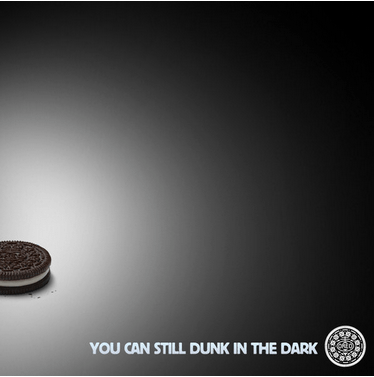
This magnificent ascent – from one brand mentioning Twitter in 2011 to 57% of them running hashtags in 2014 – can be traced back to one seminal moment in Super Bowl advertising: the disastrous blackout during the Ravens wipe out of the 49ers in Super Bowl 2013, and the way one brand chose to react to it. Oreo, everyone’s favorite sandwich cookie, tweeted an ad that read “Power Out? No problem”. The ad featured a lit Oreo cookie against a black background and below it a snappy caption that read: “You can still dunk in the dark”. The effect was staggering and instantaneous: the ad got more than 15,000 re-tweets and more than 20,000 Likes on Facebook. According to a Wired piece dedicated to Oreo’s brilliant move, the company’s response was not a result of a spontaneous late night call by one tired exec to his or her in-house social media expert, but rather an outcome of careful planning. Oreo had built a social media war room, with 15 social media geeks ready to respond to whatever happened, whenever it happened, during the Super Bowl. Present in the room were copywriters, a strategist and artists.
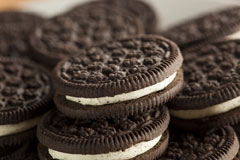
Oreo scored big with social media that night, and other brands – though less creative – were also quick to respond. Bud Light and Speed Stick pegged on the term “power outage”, thereby promising that people who searched for that term saw their tweets. According to Ad Age, Audi used the blackout to trash-talk Mercedes-Benz - sponsor of the Superdome in New Orleans, while Mercedes-Benz had a blackout all their own, and did not respond to either the blackout or the Audi jab.
Oreo fired the first shot, and in Super Bowl 2014, brands willing to pay $4 million for a Super Bowl spot began to assemble social media war rooms of their own. Hyundai, for example, excelled with even a larger war room than Oreo’s. According to Ad Age, 30 people were present, from the head of integrated marketing to a caricaturist. According to Twitter, 14 brands invited Twitter team members into their game command centers, to watch and witness live marketing at action. Another trend emerged in 2014: brands engaging brands in their Tweets – a fast and free method to trash the competitors. It also provided brands the option to engage would-be consumers in the advertising game, something that traditional advertising could never possibly hope to do. And it may have worked, too: according to CNN, on Monday morning, nine out of the ten top-trending terms on Facebook were Super-Bowl related.
According to Nielsen SocialGuide numbers, the winner among Super Bowl brands in 2014 was Ensurance, and the funny thing is – Ensurance didn’t even run an ad during the Super Bowl. Instead, the company aired an ad after the game with a call-to-action for viewers. The brand cleverly told viewers it has saved 30%, or $1.5 million, by running the spot immediately following the game, and told them to just tweet #EsuranceSave30 for a chance to win the money. This inspired viewers them to send 1.9 million tweets on that very night. By late Monday morning following the big game, 2.39 million people had entered the contest, according to Ad Age. Ensurance told reporters that this number included 200,000 entries that streamed within a single minute following the spot. In this way, Ensurance combined traditional advertising with the power of social media to promote their product.
The major change brought about in 2014 – brands acting like actual people on social media during the big game – isn’t likely to go anywhere on February 1, 2015. The only question that remains is who, in what war room, will have an Oreo-like brainwave, and take Twitter and its social media counterparts by storm.